Wedding Advice
How do you plan a backyard wedding in Melbourne?
Practical advice for planning a Melbourne backyard wedding, from weather backups and budgets to food, flowers, setup and family help.
A backyard wedding can be a brilliant way to make the day feel personal, relaxed and properly yours. It can also shift a surprising amount of work from a venue team onto you, your family and the people who offer to help.
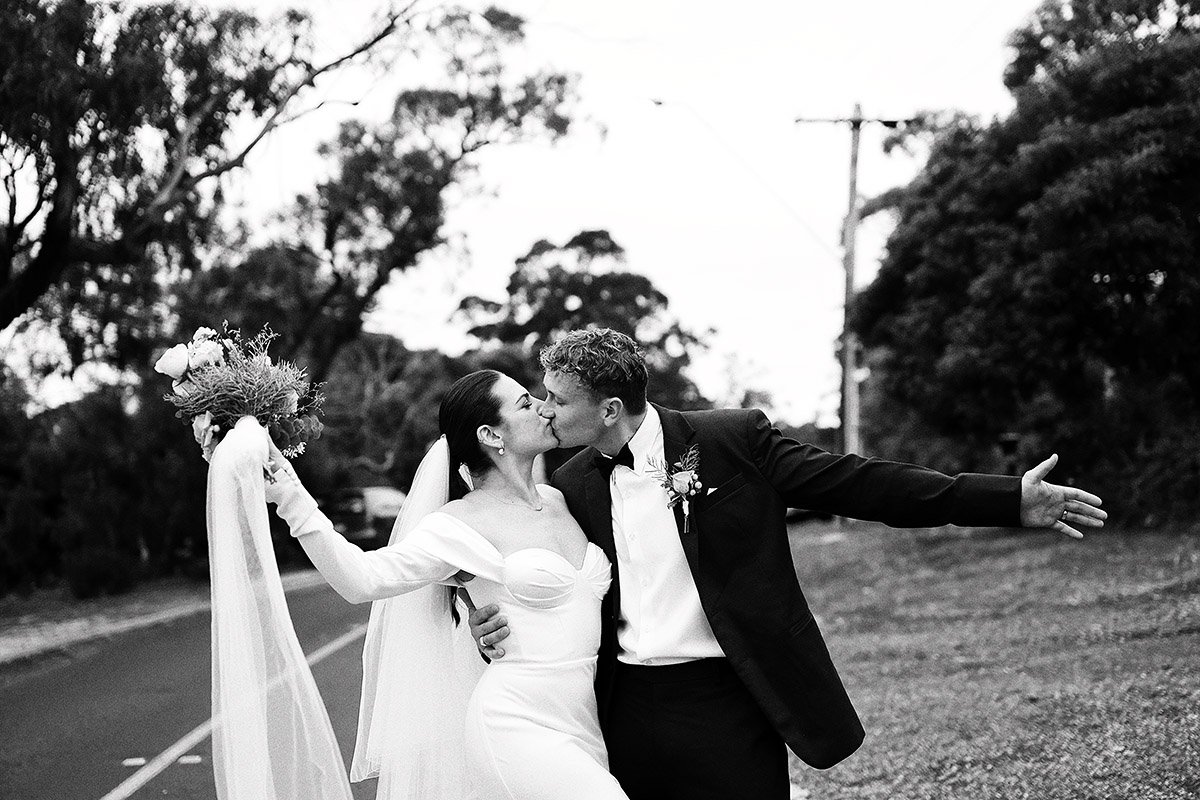
At one home wedding I photographed, the couple chose the bride’s parents’ house because it already held family memories and felt familiar rather than formal. They also liked having more freedom around the shape of the day, including when things started and finished. That is the real appeal of getting married at home: you can make decisions around your people, your house and your priorities rather than fitting into a venue’s usual format.
The practical question is whether the property, budget and support around you can carry that freedom.
Is your home suitable for the wedding you have in mind?
Start with the house and garden before booking suppliers. Walk through the day as a guest would: where will people arrive, gather, eat, get a drink, use the bathroom, shelter if needed and leave at the end of the night?
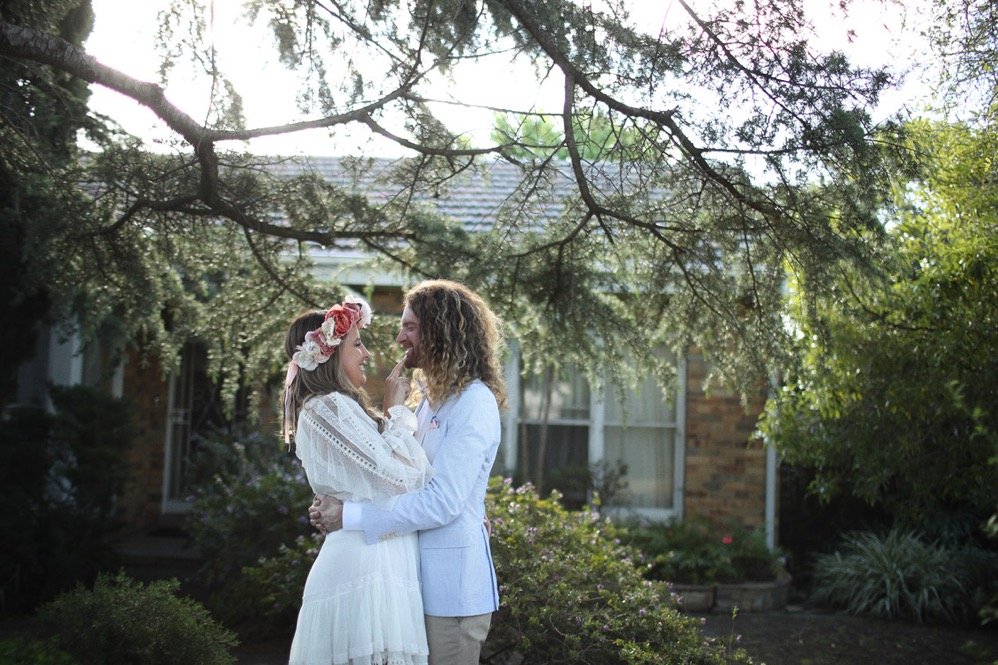
One couple I photographed knew their family property well, which made planning easier. They knew where they could find extra food and drinks, had a bedroom that could become a private getting-ready room, and had enough indoor space to move parts of the day inside if the weather turned.
That indoor option matters. At their wedding, the possibility of rain around ceremony time created understandable stress on the morning. Having room indoors did not make the forecast disappear, but it gave them a workable fallback.
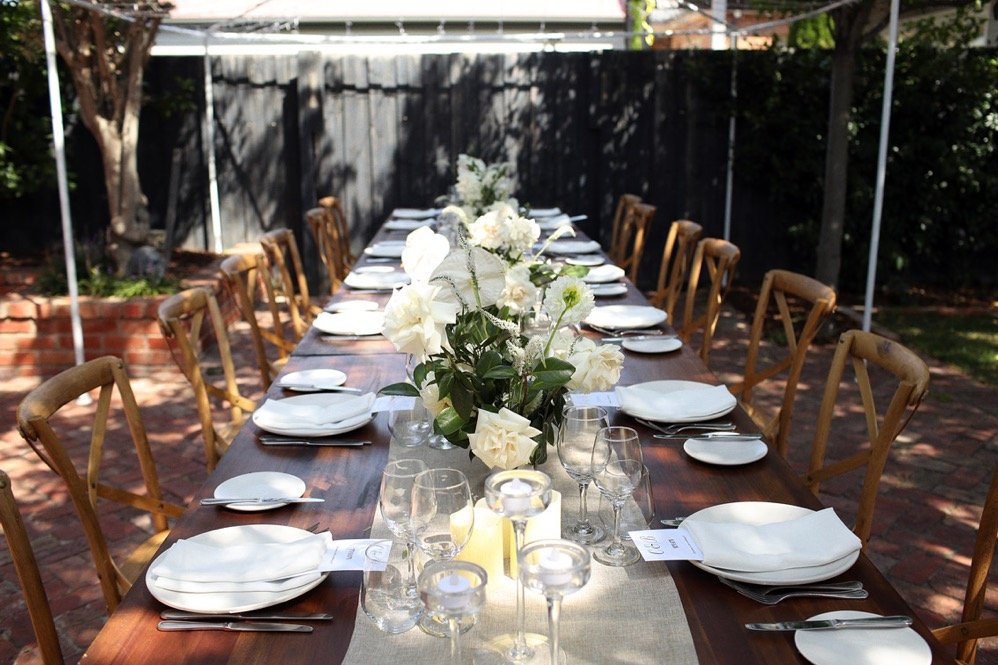
Before you commit, be honest about the things a venue normally provides without much thought: usable bathrooms, food preparation space, weather cover, lighting, power, places for guests to sit and somewhere private to get ready. A backyard wedding does not need to be elaborate, but it does need a practical plan for each part of the day.
How much planning does a home wedding take?
Usually, more than couples first expect. A venue brings systems, staff and infrastructure; at home, you and your family are responsible for bringing those pieces together.
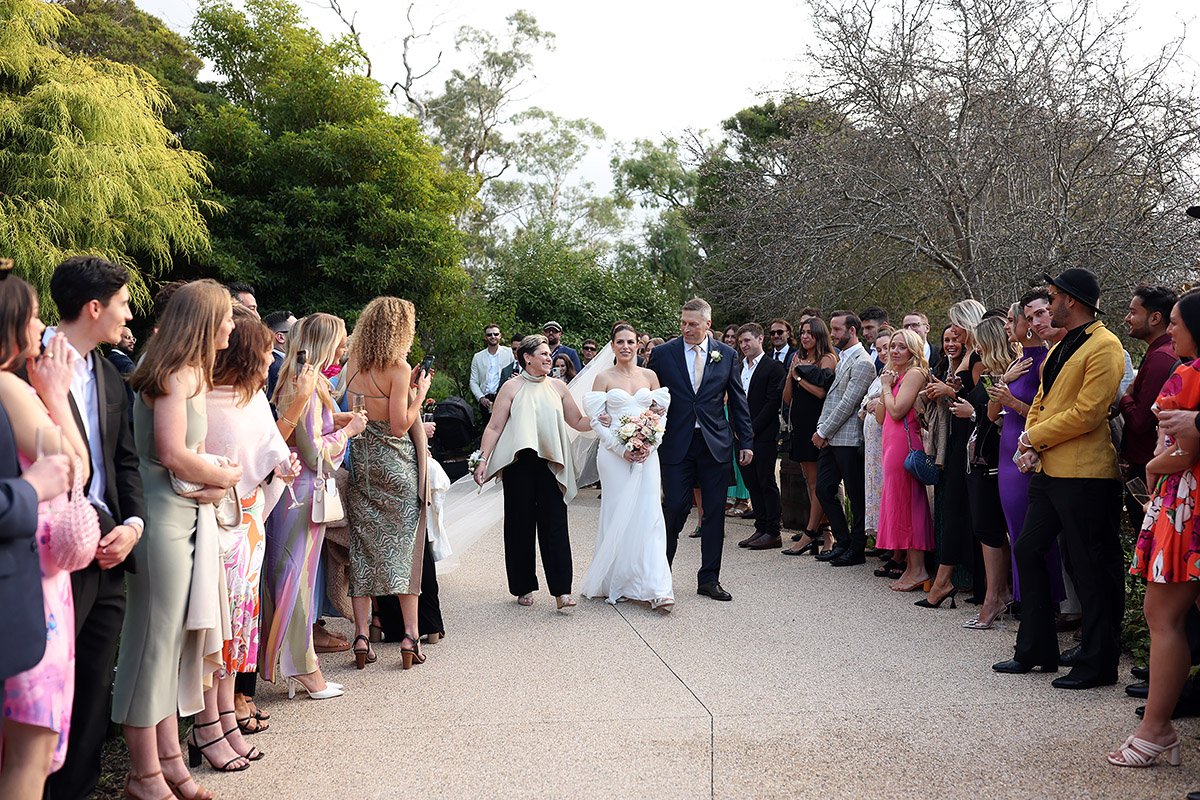
The bride at this wedding spent about six months actively preparing and tried to organise many suppliers around a year ahead where she could. The house and garden needed attention as well. Her dad spent significant time clearing garden debris and filling rabbit holes, while the couple also arranged for the house to be painted before the wedding.
Make a single working spreadsheet early. One bride I photographed recommends using it to track the budget, supplier quotes, payments still owing and jobs that have not yet been organised. Keep it simple enough that you will actually update it, and give every job an owner and a deadline.
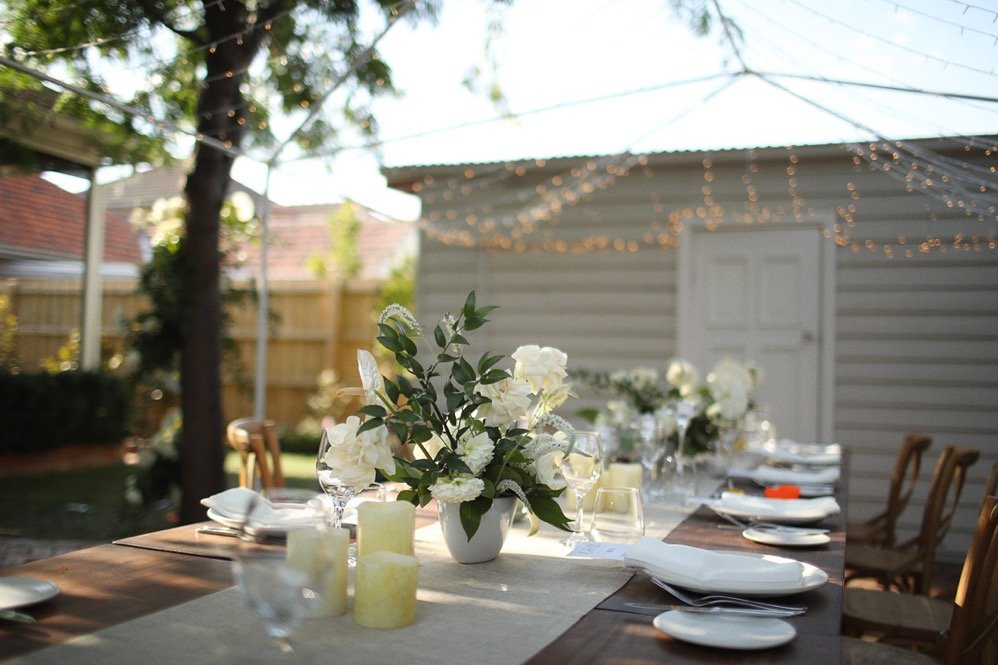
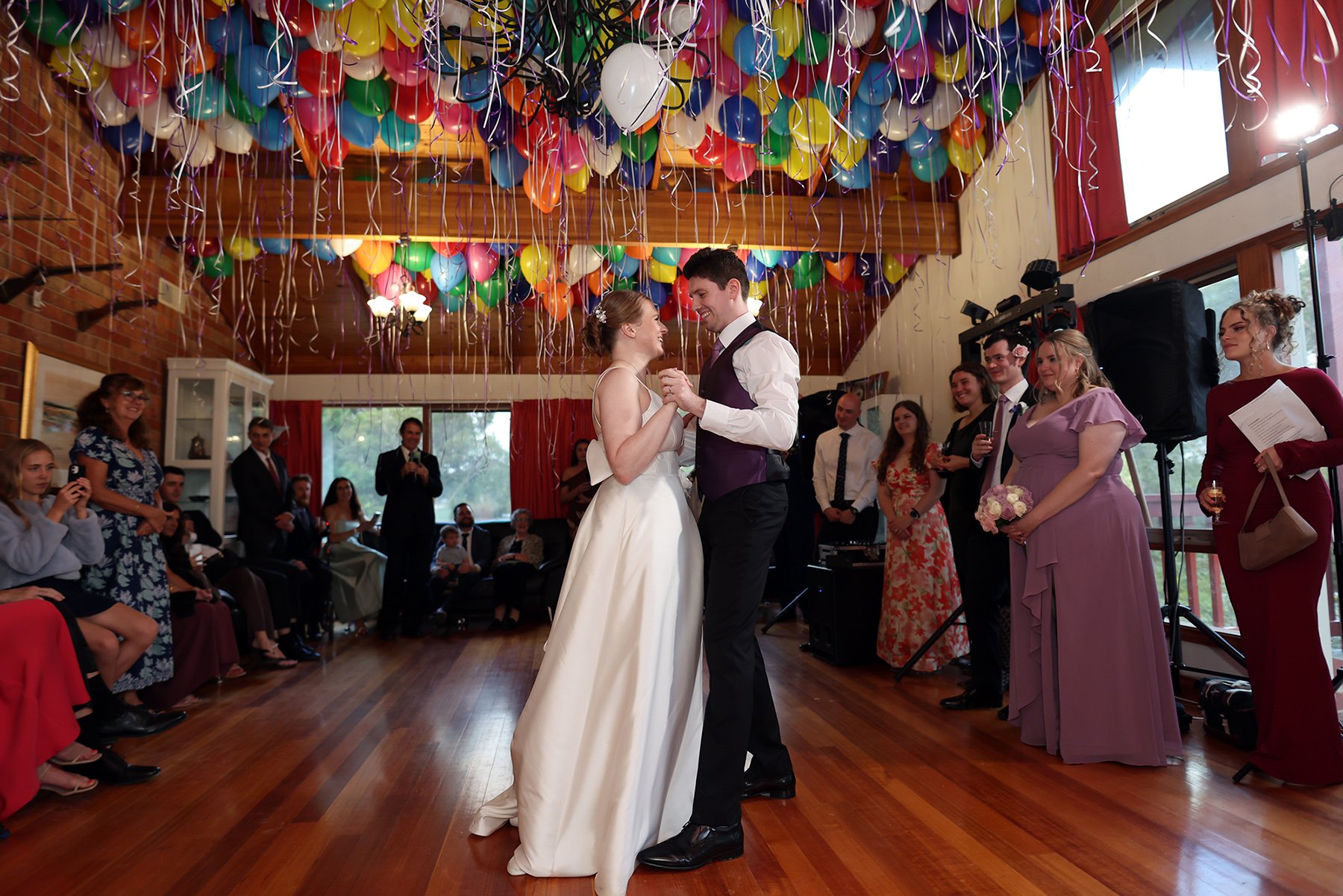
It also helps to separate jobs into three lists: what must be done before suppliers arrive, what can be set up the day before, and what somebody other than the couple can manage on the wedding day. At this home wedding, balloons were delivered and arranged the night before, which removed one pressure from the morning.
Can a backyard wedding actually save money?
It can, but do not assume the house itself makes the wedding cheap. One couple initially expected a home wedding to cost much less than a traditional venue, and cost was a major attraction. In practice, savings can be offset by the preparation of the home and garden, as well as the suppliers and details a venue might otherwise organise.
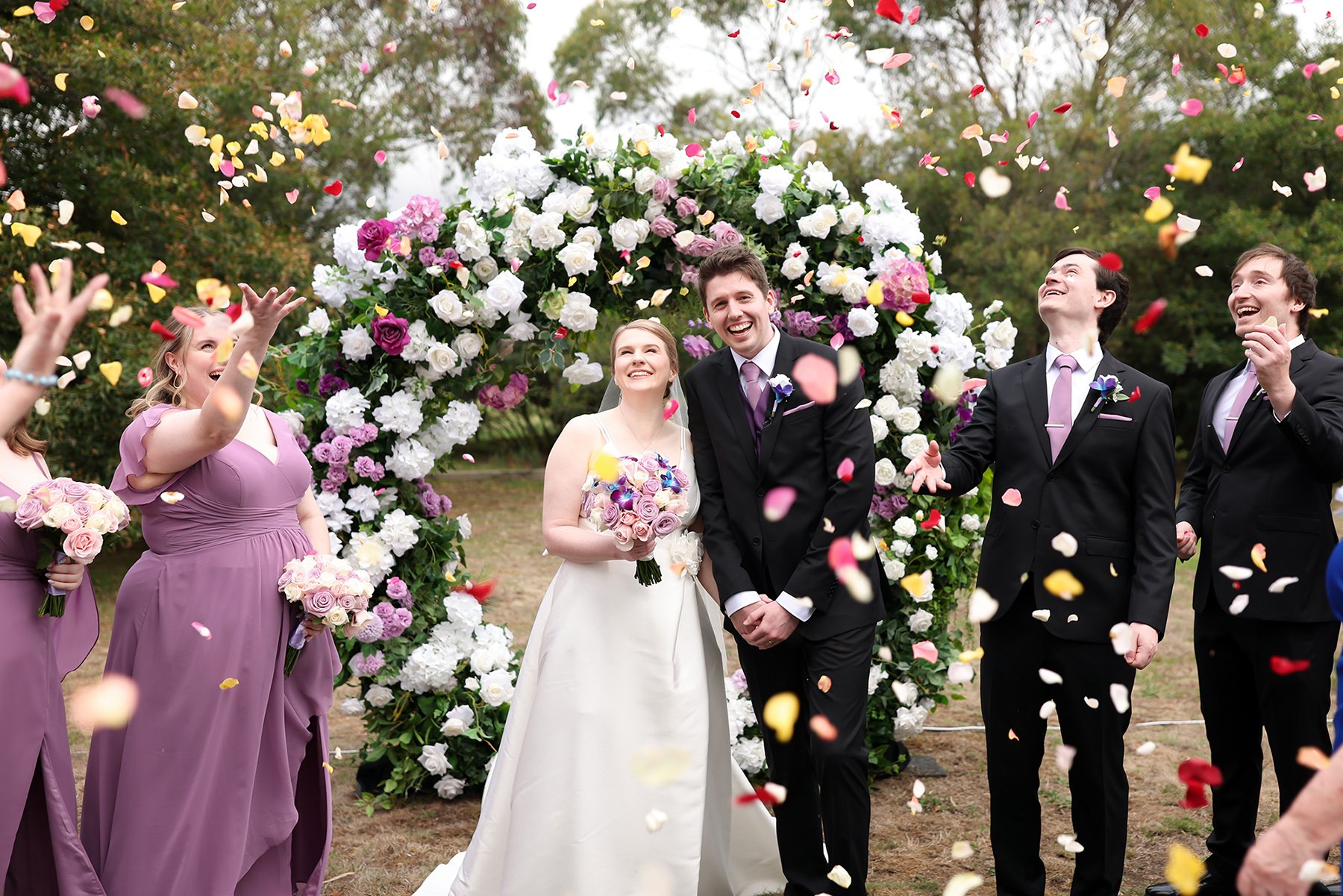
The useful approach is to choose where you want the visual impact and where you are happy to simplify. Flowers were one area where this bride found costs escalated quickly. The couple combined fresh and artificial flowers, used silk flowers for boutonnieres and corsages, and hired a silk-flower halo and decorations.
For context, she was quoted about $8,000 for a real-flower arch, compared with about $800 to hire a silk-flower halo for the day. That will not be every couple’s quote or preference, but it is a good example of comparing the overall effect rather than assuming every wedding element needs to be premium or traditional.
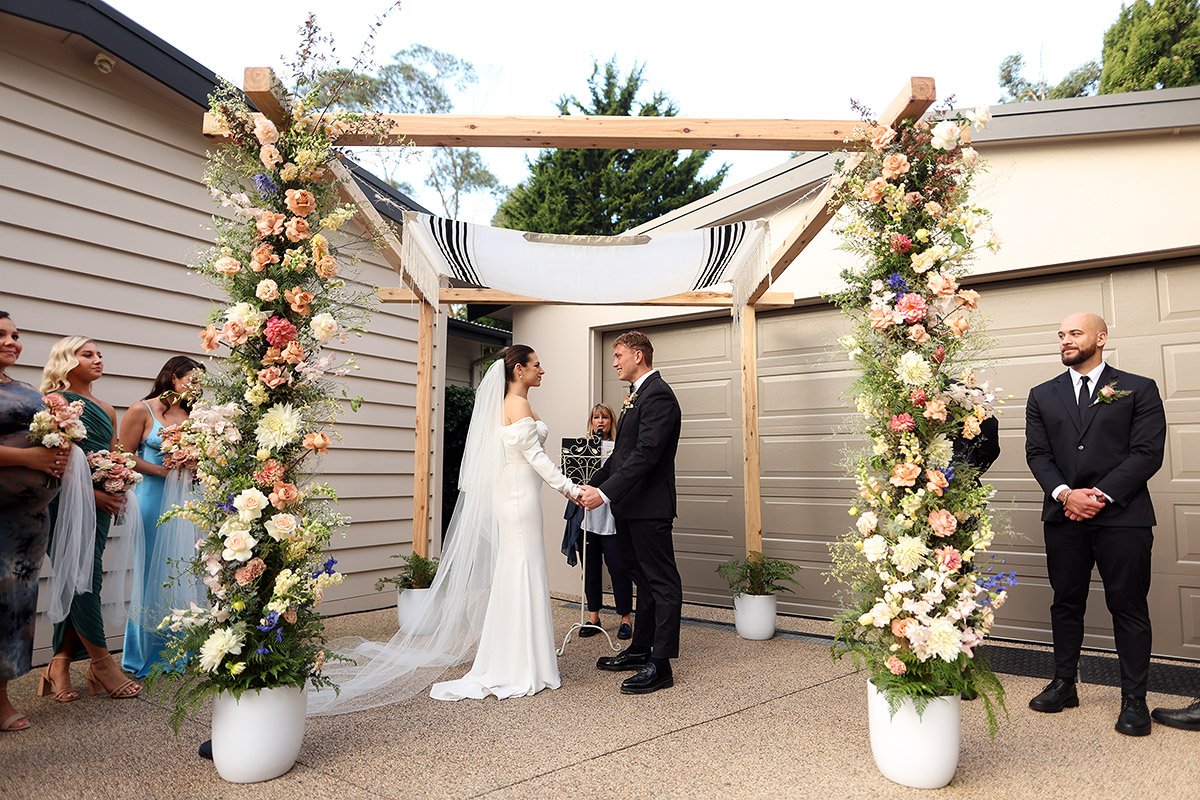
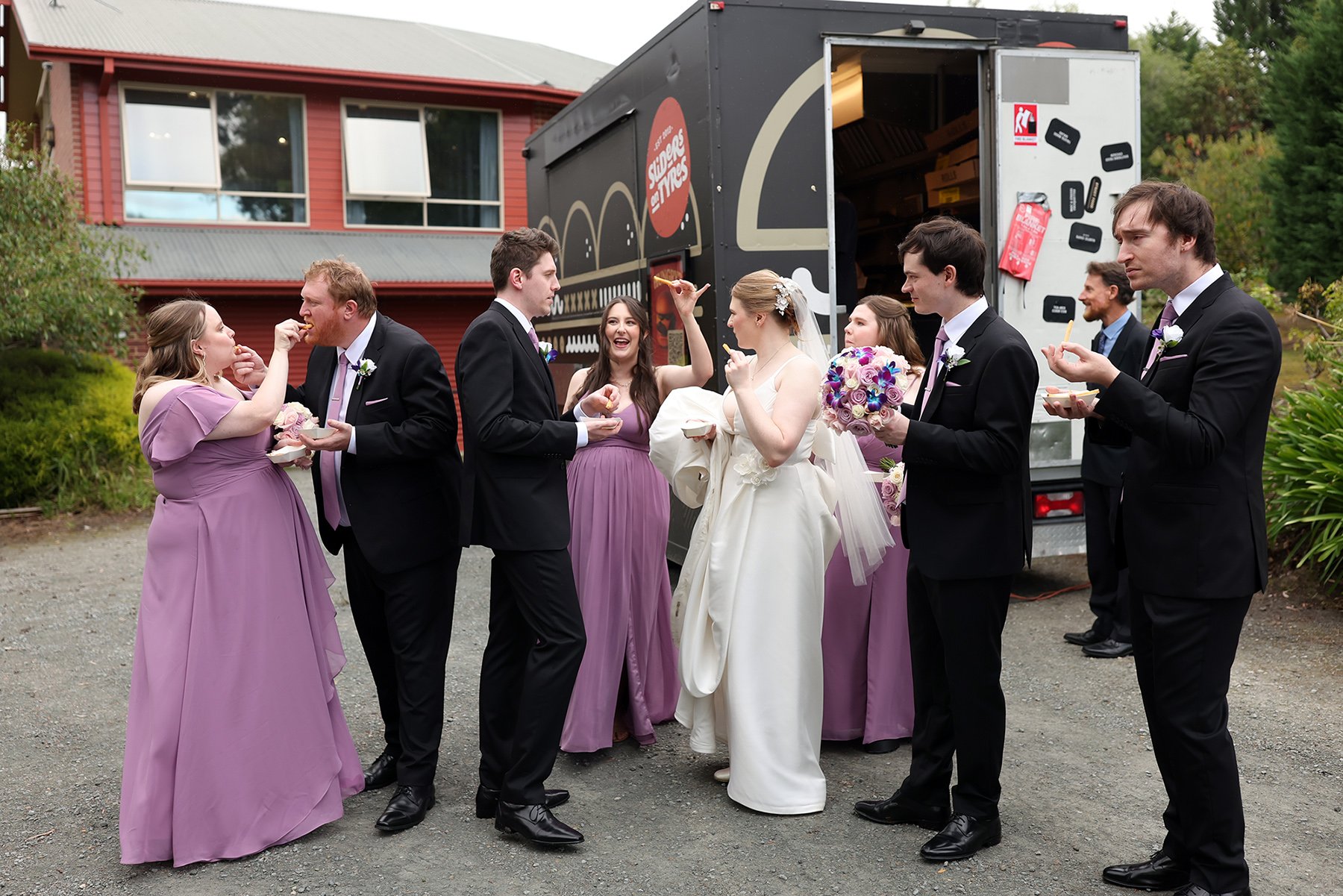
Food can follow the same thinking. This couple used a food truck serving burgers, chips and rainbow churros instead of a formal sit-down meal. Their first choice became difficult to contact, so they found another option. The lesson is to have a shortlist for important suppliers and to focus on guests being well fed, rather than trying to make every part of the menu formal.
What should you plan for guests, food and drinks?
A home setting can feel easygoing, but guest comfort still needs organising. Think through arrival times, where people will wait before the ceremony, whether older relatives can move safely around the garden, and what happens if everyone needs to move inside quickly.
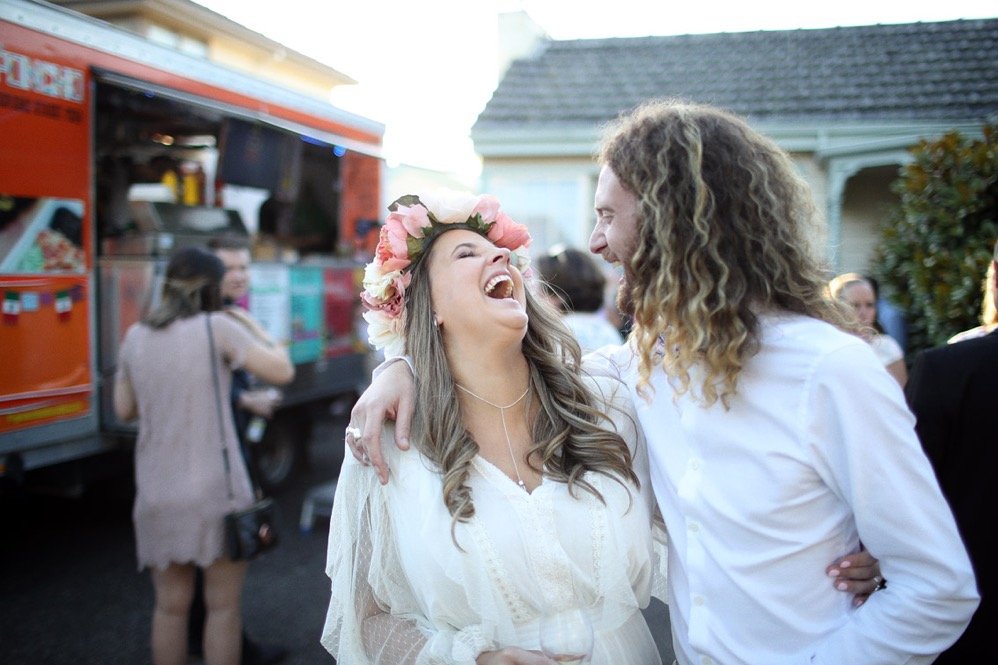
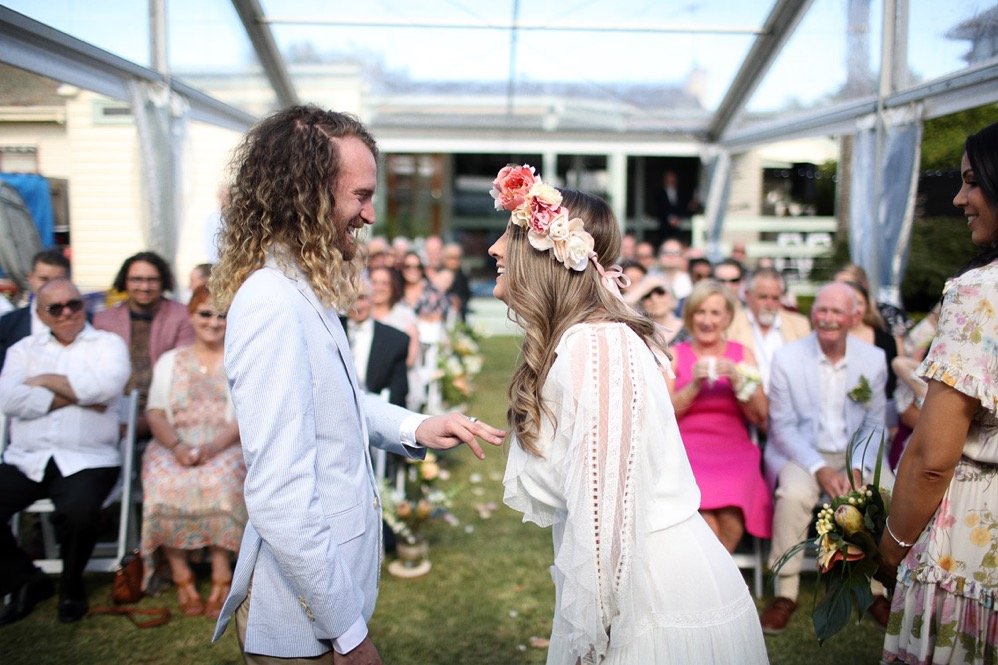
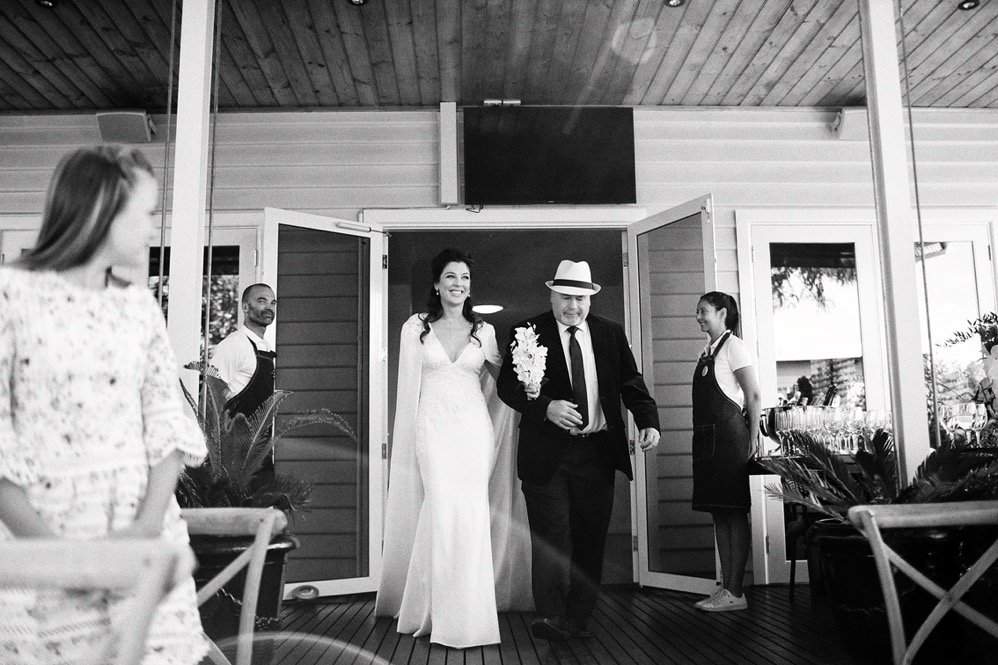
The getting-ready space is worth protecting too. At this wedding, the bride used a bedroom with room for her dress and a view over the property. She could hear guests arriving and see activity outside while staying separate from it before the ceremony. If the house allows it, set aside one room that is not part of the general event traffic.
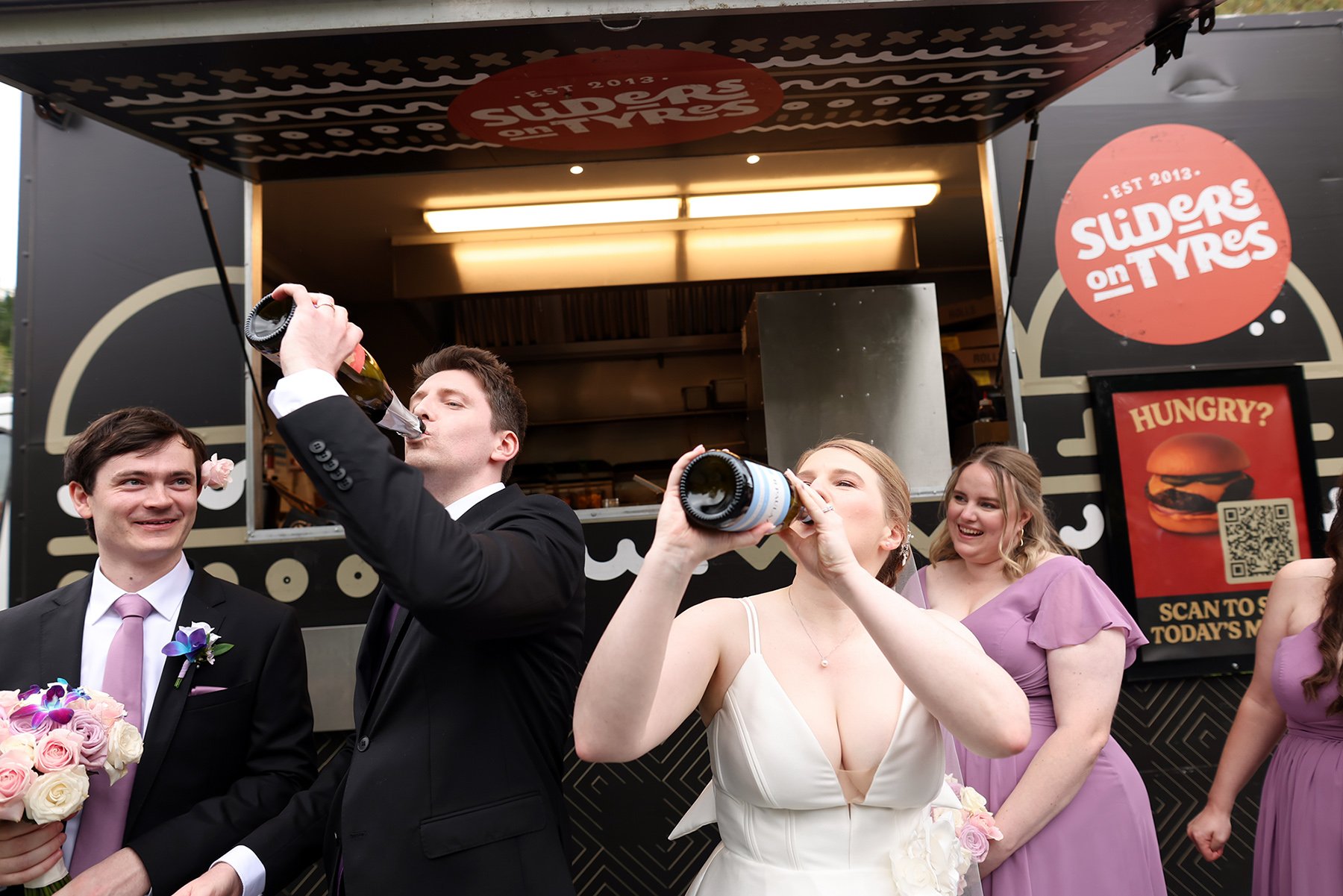
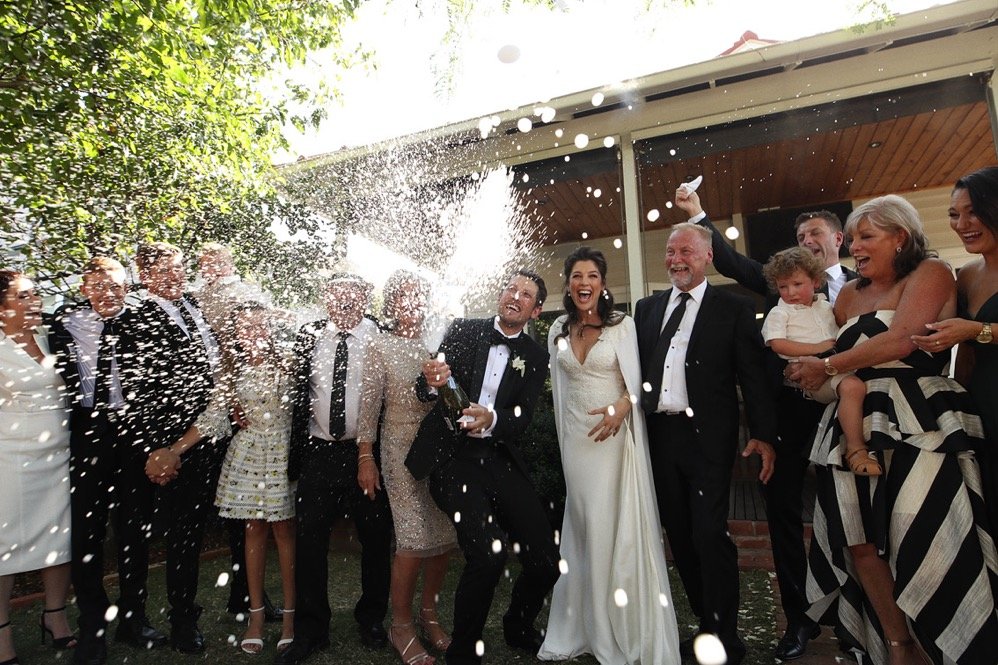
For drinks, use your guest list and your crowd rather than buying broadly across every category. This couple planned for about 75 guests and bought 63 bottles of white, red and sparkling wine. Most sparkling and white wine was used, but more than 30 bottles were left over, largely red. Their experience is a good reminder to buy according to what your guests genuinely drink, and to leave room in the budget for non-alcoholic options, ice and last-minute food needs.
Who will help make it work?
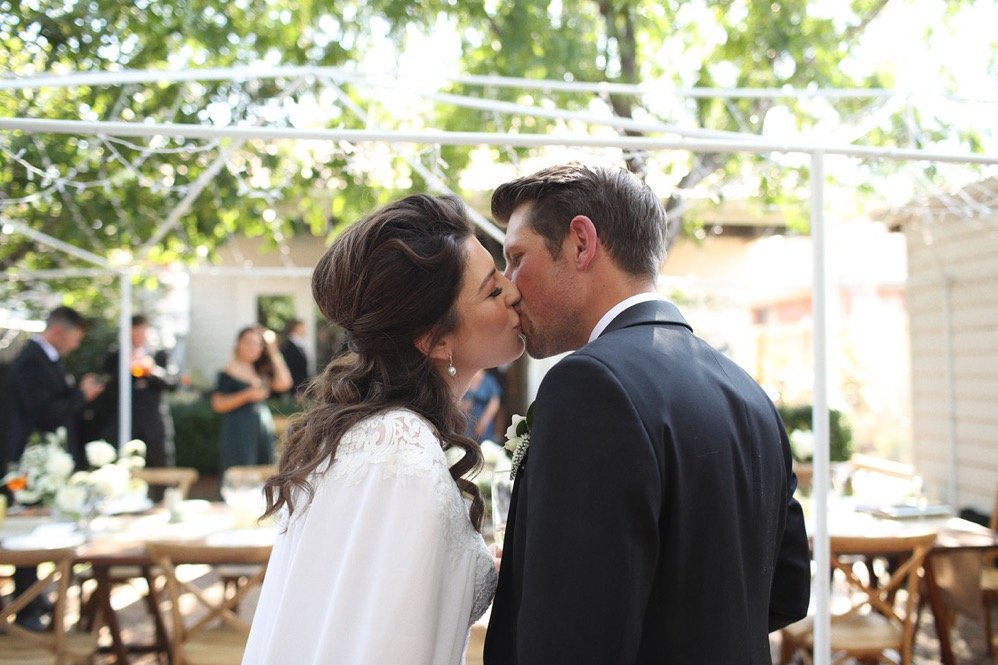
A backyard wedding is rarely a two-person job. At this wedding, friends and family helped with practical tasks and small details during the preparation and on the day. That support was a big part of what made the home setting workable.
Ask for help early and make the jobs specific. Someone may be happy to manage supplier arrivals, keep the getting-ready room quiet, replenish drinks, direct guests or check that the weather backup is ready. Clear jobs are kinder than expecting family members to notice what needs doing while they are also trying to enjoy the wedding.
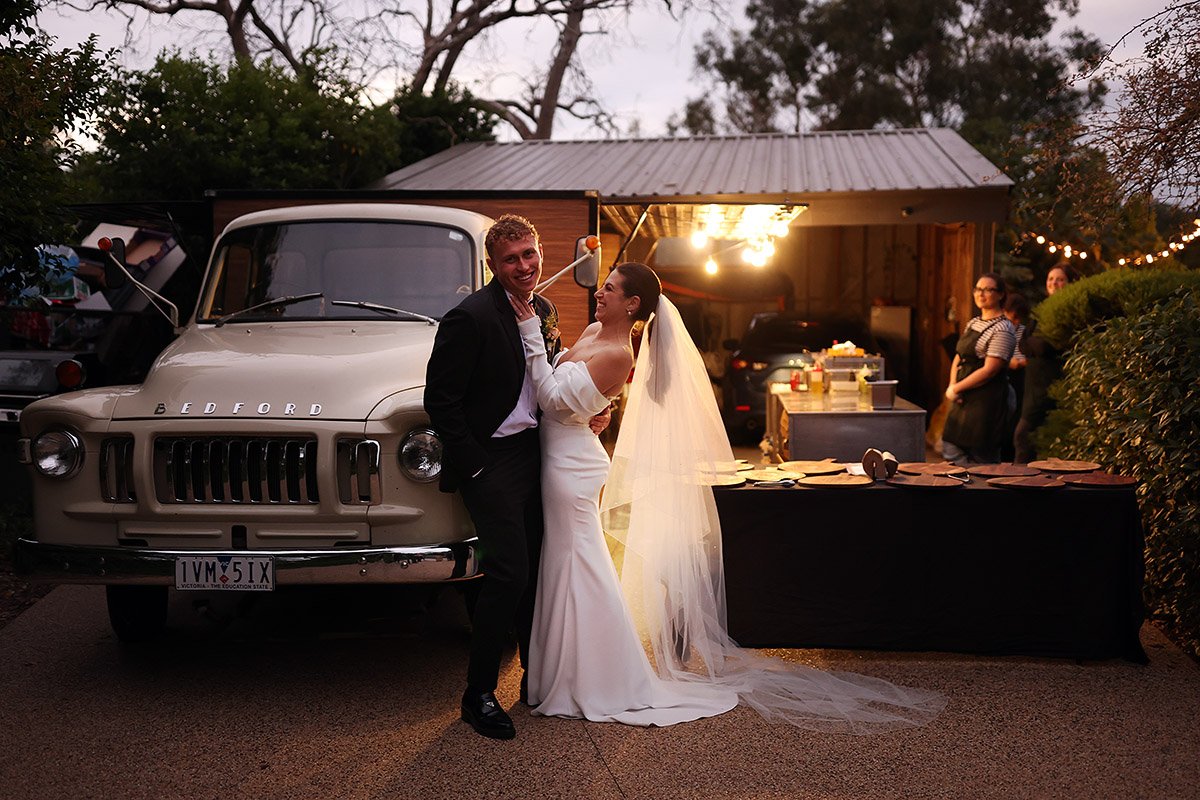
A home wedding suits couples who value personality, flexibility and familiarity, and who are prepared to take responsibility for the work behind those benefits. If you have enough space, a credible wet-weather option, time to prepare and people willing to pitch in, getting married in a Melbourne backyard can feel far less like hiring a place for the day and much more like welcoming everyone into your life.